Quick & Easy Meals
Air Fryer Salmon in 10 Minutes
By Sarah Mitchell · September 28, 2026 · 7 min read
Jump to Recipe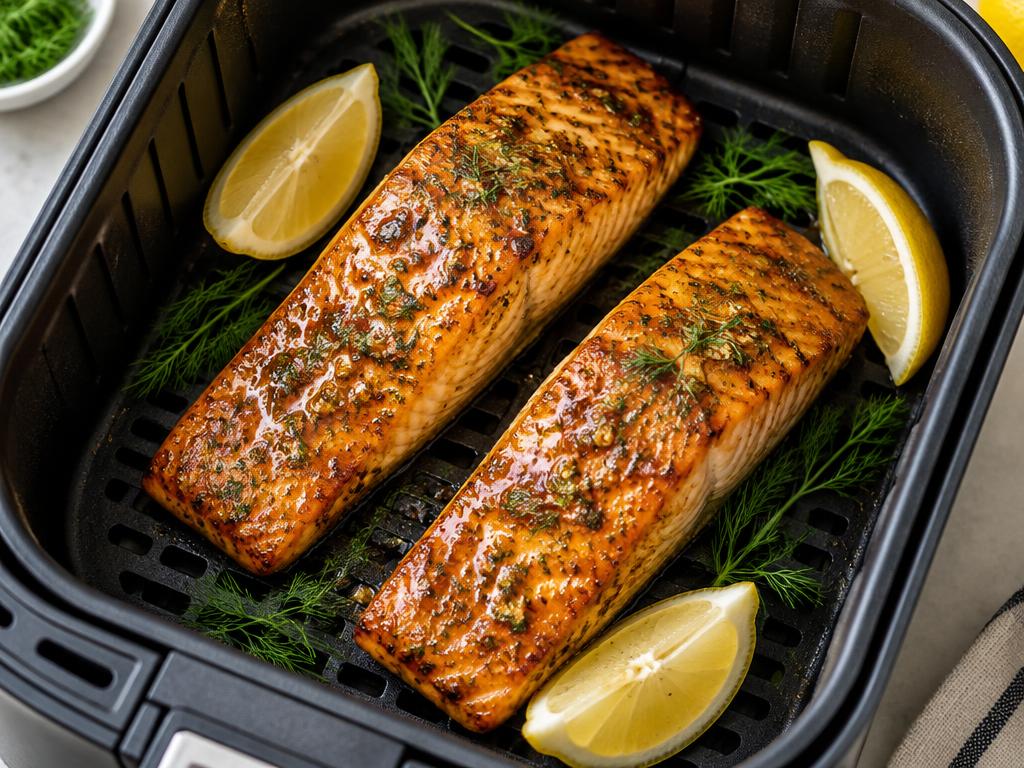
Air frying gives salmon a lightly crisp, caramelized top while keeping the center tender — and you won't heat the whole kitchen.
Timing by thickness
1-inch fillets take 7–9 minutes at 400°F. Thinner tail pieces need 5–6 minutes.
Don't skip the preheat
A 3-minute preheat gives a better sear on the glaze.
Skin on or off?
Skin-on fillets hold together better and the skin crisps nicely.
Serving ideas
Rice and steamed greens, salad, or flaked into tacos.
Buy portions that finish together
Two salmon portions can have the same weight and still cook at very different speeds. A broad, thin tail piece exposes more flesh to hot air than a compact center-cut piece. When shopping for this recipe, look for two portions around 6 ounces (170 grams) each with similar thickness through the middle. This matters more than whether their outlines look identical.
Inspect packaged fish for firm flesh, intact packaging, and a mild smell once opened. Frozen salmon is a practical option when fresh fish is not convenient, but plan the thawing step rather than expecting the short recipe time to include it. Keep raw fish refrigerated at 40°F (4°C) or below and generally use it within one to two days, or freeze it for later.
Run clean fingertips lightly over the flesh to locate pin bones and remove them with clean fish tweezers before seasoning. Blot the fish thoroughly with disposable towels. Surface water dilutes the glaze and delays browning because it must evaporate first. Keep the portions on a dedicated plate while you prepare the basket, and wash hands and tools after handling raw fish rather than touching appliance handles and seasoning containers with contaminated fingers.
Thaw frozen fish with the package in mind
The easiest thawing method is in the refrigerator on a tray that contains leaks. Allow enough time for the thickest part to soften completely; a frozen center makes a short, hot cook less predictable. Vacuum-packed fish needs special attention. Follow the package thawing instructions, and remove fish from reduced-oxygen packaging before refrigerator thawing when the label directs it. Do not assume a sealed vacuum pouch is suitable for every thawing method.
For faster thawing, use a leakproof bag in cold water, changing the water every 30 minutes, and cook immediately afterward. Follow any instructions requiring removal from the original vacuum packaging first. Never thaw salmon on the counter or in warm water. The outside can warm into an unsafe range while the center remains frozen, and an air fryer does not undo unsafe handling before cooking.
Once thawed, pat the fish dry and check for ice crystals in the thickest area. If a portion still feels rigid, finish thawing rather than compensating with a thick coating of glaze and extra cooking time. Cooking directly from frozen requires a different sequence and usually additional time; it should not be treated as interchangeable with this thawed-fillet method. Keep the glaze refrigerated while finishing any unexpected thawing delay.
Control glaze thickness and sugar browning
Honey helps the surface brown quickly, but it also narrows the margin between caramelized and scorched. Mix the honey, soy sauce, grated garlic, and oil until the honey is fully dispersed. If the honey is very thick, stir the mixture patiently rather than adding a large splash of water, which makes it run straight off the fish into the basket.
Brush on a thin, even coat. You want a shiny surface, not a puddle around the fillet. Thick accumulations of garlic can burn before the center is cooked, so spread them out and keep loose clumps off the exposed basket. If your air fryer tends to brown food aggressively, apply a lighter initial coat and reserve a clean portion of glaze before the brush touches raw fish.
A reserved, uncontaminated spoonful can be used as a finishing drizzle after cooking. Glaze that has contacted raw salmon should not be served uncooked or casually brushed over the finished fish. Discard the small contaminated remainder rather than saving it. For a less sweet version, reduce the honey slightly and add lemon zest after cooking. Do not simply increase the soy sauce to replace the missing honey, since that changes saltiness without replacing its coating properties.
Give moving air a clear path
An air fryer works by circulating hot air rapidly around food. Leave space between the salmon portions and keep them in a single layer. If the fillets touch across a broad area, their adjoining surfaces cook more slowly and remain wetter. A compact basket may need two batches even when the total weight looks modest. Recheck timing for the second batch because the appliance will already be thoroughly hot.
Place skin-on portions skin-side down on a lightly oiled cooking surface. They generally do not need flipping, which can damage delicate flesh and scrape away glaze. Use an oil product and application method compatible with the appliance instructions. A small amount brushed onto the basket offers more control than spraying indiscriminately around a hot heating element.
If using a liner, select one approved for your appliance and keep airflow openings as clear as possible. Never preheat with loose parchment inside: moving air can lift it toward the heating element. Food should hold any permitted liner securely in place. A solid liner may collect liquid beneath the salmon and soften the underside, so convenience can come at a texture cost. Check the manufacturer’s directions before putting foil, paper, or any accessory into the basket.
Measure the center without breaking the fillet
Use the stated cooking time as a reminder to check, not proof of doneness. Near the end, slide the basket out and insert an instant-read thermometer from the side into the thickest middle of the fish. The tip should be inside the flesh, not touching the basket or sitting between the skin and meat. Check both portions if their thickness differs.
The safe internal temperature for fish is 145°F (63°C). At that point the flesh should be opaque and separate readily with a fork, but visual cues are less precise than a thermometer, especially beneath a dark glaze. Do not remove fish at a lower temperature on the assumption that a brief rest will definitely complete cooking. Carryover varies with portion size and appliance conditions.
If the center is not ready but the glaze is already dark, reduce the setting to around 350°F (175°C) and continue in short intervals, checking again. If one portion is done, remove it to a clean plate while the other finishes. Support the fillet underneath with a wide spatula rather than gripping it with tongs. A minute of settling on the plate can make transfer easier, but avoid leaving cooked fish sitting out while you prepare an entirely separate meal.
Coordinate sides with the short cooking window
Ten minutes is enough time to finish a side, but not necessarily enough to cook every grain from dry. Start rice before preparing the salmon, or use properly stored cooked rice that can be reheated thoroughly. Microwave-ready grain pouches can simplify timing; follow their package directions rather than estimating. Have bowls and lemon wedges ready before the fish enters the basket so the finished portions do not wait unnecessarily.
For vegetables, steam broccoli or green beans in a covered saucepan while the salmon cooks. Keep them separate from the raw fish preparation area. A quick cucumber salad also works: slice cucumber, toss with rice vinegar and a little oil, then season lightly because the glaze already contains soy sauce. Add the dressing close to serving to preserve some crunch rather than drawing out water throughout the cooking process.
Change the flavor profile by using maple syrup in place of honey or adding finely grated ginger to the glaze. For a soy-free approach, choose an appropriate substitute and compare sodium levels on the label; products are not equally salty. Keep substitutions modest on the first attempt so the coating still browns predictably. Finish spicy versions with chili flakes or a little hot sauce after cooking instead of adding a thick sugary chili sauce that may scorch early.
Keep cooked salmon useful for another meal
Set aside leftover portions using clean utensils, then refrigerate promptly in shallow covered containers. The limit is two hours at room temperature, or one hour when the ambient temperature exceeds 90°F (32°C). Keep the refrigerator at 40°F (4°C) or colder and use cooked salmon within three to four days. A strong sauce or a squeeze of lemon does not extend that safe refrigerated storage window.
For a cold lunch, flake properly chilled salmon over dressed lentils or greens shortly before eating. Check carefully for overlooked bones as you break up the portion. Pack the lunch with an ice pack if it will be away from refrigeration. Store wet dressing separately from lettuce and keep the cooked fish away from raw ingredients that could contaminate it during assembly.
For a warm meal, reheat only the amount you plan to eat and bring leftovers to 165°F (74°C). A covered dish with a teaspoon or two of water protects the surface better than another full blast at the original air-fryer setting. Check the middle as well as the edges, since small pieces can become dry before a thick center warms. Freeze extra portions promptly if you cannot use them within the refrigerated window, accepting that thawed cooked fish may be softer.
Air Fryer Salmon in 10 Minutes
Ingredients
- 2 salmon fillets (6 oz / 170g each)
- 1 tbsp honey
- 1 tbsp soy sauce
- 1 garlic clove, grated
- 1 tsp olive oil
- Lemon wedges
Instructions
- Preheat air fryer to 400°F (200°C).
- Mix honey, soy, garlic and oil.
- Pat salmon dry and brush with glaze.
- Air fry 7–9 minutes until salmon reaches 145°F (63°C).
- Serve with lemon.
Nutrition (per serving, estimated)
Calories 380 · Protein 34g · Carbs 10g · Fat 22g
Nutrition estimated using USDA FoodData Central values; actual values vary by brand and portion.
Key Takeaways
- Timing by thickness: 1-inch fillets take 7–9 minutes at 400°F.
- Don't skip the preheat: A 3-minute preheat gives a better sear on the glaze..
- Skin on or off?: Skin-on fillets hold together better and the skin crisps nicely..
FAQ
Do I need parchment?
Not required; a light oil spray prevents sticking.
Made this recipe? Rate it and share it on Pinterest!
Tag us so we can see your creations.