Kitchen Gear Reviews
Air Fryer vs. Convection Oven: Which Should You Use?
By Sarah Mitchell · September 29, 2026 · 7 min read
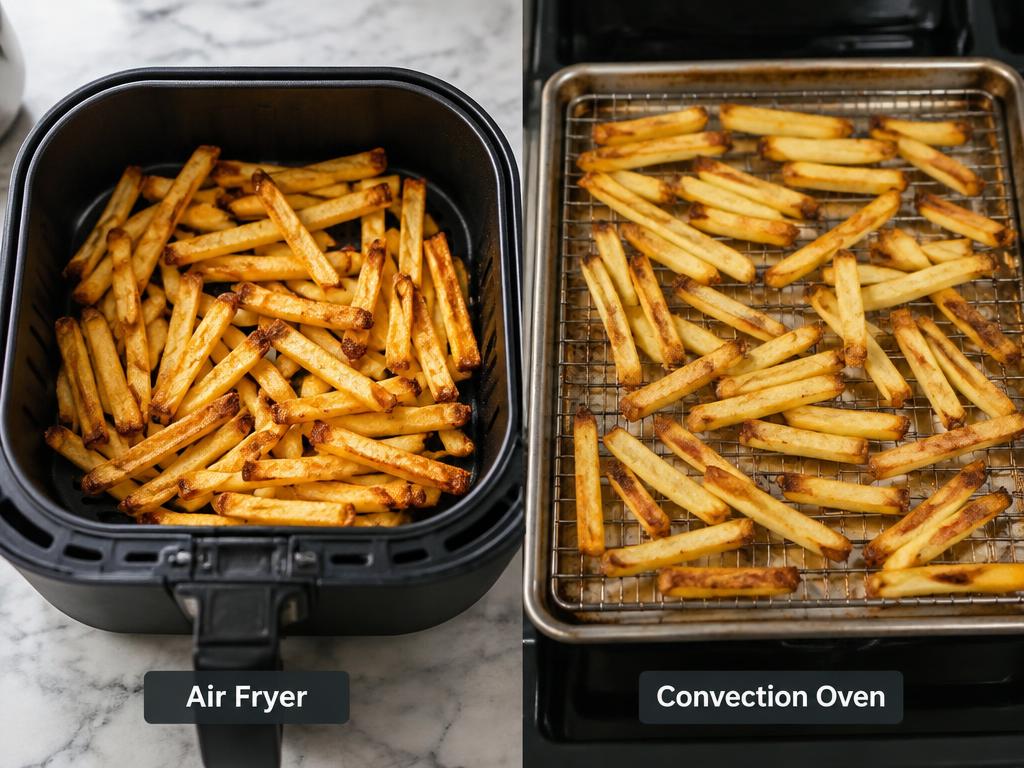
Both use a fan to circulate hot air, but size and airflow make a real difference in results.
How they differ
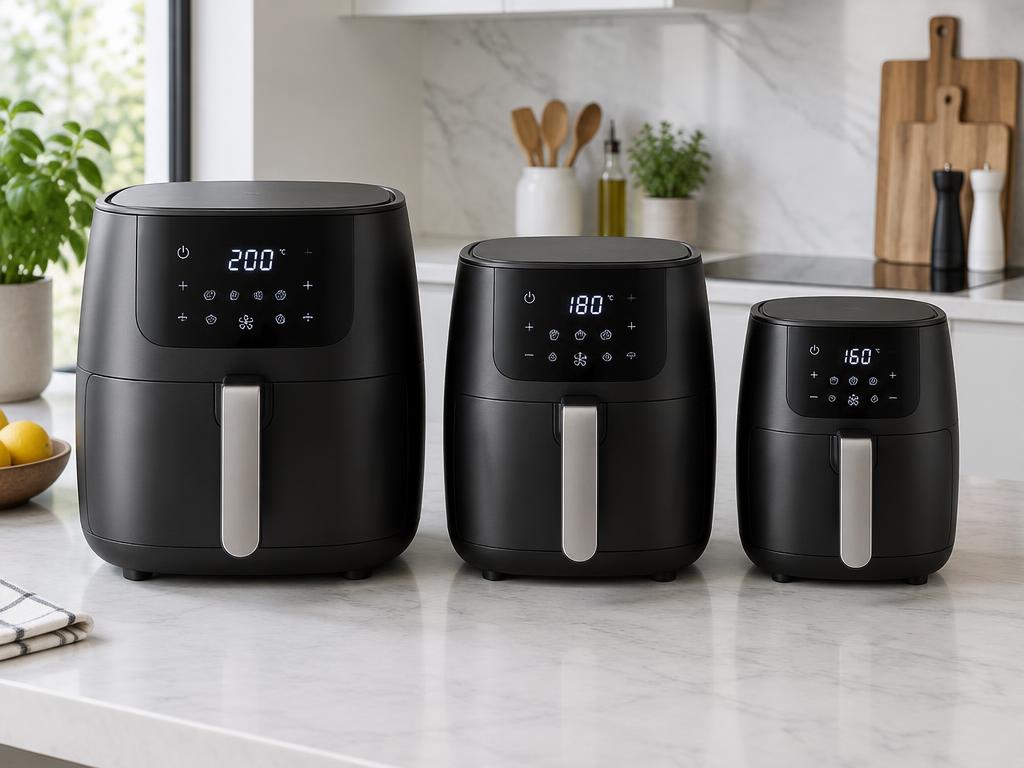
Air fryers have a smaller chamber and stronger fan, so air moves faster and food crisps quicker.
Speed
Air fryers preheat in 2–3 minutes versus 10–15 for most ovens.
Capacity
Convection ovens win for sheet-pan dinners and large batches.
Energy use
For small portions, air fryers generally use less energy.
Choose the appliance around the whole meal
Start with everything that needs to reach the table, not just the ingredient most likely to become crisp. A small basket can handle a side dish well while leaving you without space for the main course. A full oven may be the simpler choice when vegetables, protein, and bread need overlapping cooking time. Sketch the sequence before deciding which appliance is faster for that particular dinner.
Cooking in batches introduces holding time that an individual recipe often ignores. The first batch may cool while the last finishes, and keeping it covered can soften its browned exterior. An oven can sometimes hold finished food on a rack, but that adds another appliance to the process. If the plan requires two machines anyway, compare the actual cleanup and attention required rather than assuming the smaller cooker automatically simplifies dinner.
There are also good reasons to split tasks deliberately. An air fryer can refresh leftover potatoes while a convection oven bakes a casserole, keeping their different moisture needs separate. For a single diner, the reverse may be true: reheating everything in one small appliance is easier. Neither appliance wins every meal, so use the number of components, their shapes, and their finishing times as your starting decision framework.
Understand why cookware changes the result
Air movement only helps where it can reach the food. A deep dish or a crowded tray shelters surfaces from moving air, even in an appliance with a powerful fan. A shallow pan with space between pieces encourages moisture to escape. Before blaming the oven or fryer for soft results, look at whether the container is trapping steam around the food and whether the pieces touch along broad surfaces.
Perforated baskets expose more of the underside, but drips need somewhere safe to go. In a convection oven, use only compatible racks and trays, positioned according to the manual. Never place materials on the oven floor to catch grease unless the manufacturer specifically permits it. A rack over a suitable pan may improve underside exposure, though it also adds cleanup and must fit securely without scraping oven walls.
Pan material matters when transferring a recipe. A dark metal sheet, a light metal pan, and a thick glass dish absorb and transfer heat differently. Do not change the appliance, cookware, food quantity, and recipe temperature all at once if you want to understand the result. Keep as many variables steady as practical, then adjust based on actual browning and doneness rather than attributing every difference to the fan.
Convert recipes with observation instead of a fixed formula
A temperature reduction is a reasonable starting idea for some conversions, but it is not a universal rule. First check whether the original recipe already specifies convection or an air fryer. Also check whether your oven automatically adjusts displayed temperatures in convection mode. Applying a second adjustment unintentionally can leave food cooking too gently, especially when a recipe needs enough surface heat to dry and brown vegetables.
Begin with a familiar recipe and a manageable quantity. Set an earlier reminder to inspect the food, then look at the center as well as the edges. For delicate foods, the difference between nicely browned and overly dry can be narrow. Keep a thermometer available for foods that require internal-temperature verification, and use current food-safety guidance rather than shortening cooking solely because the outside looks ready to serve.
Write down the new timing only after the result is satisfactory, including the pan, food size, and portion count. If a larger batch takes longer next time, that does not necessarily mean the conversion failed; loading changes airflow and heat recovery. Recipes involving covered dishes, thick batters, or substantial liquid may transfer less directly than dry-roasted vegetables. For those, seek appliance-specific instructions instead of repeatedly cutting the original cooking time.
Use moisture as your troubleshooting guide
Browning depends partly on getting surface water out of the way. Washed vegetables that go straight into a crowded basket can steam even under strong airflow. Pat ingredients dry where appropriate and give released moisture room to escape. Frozen foods also vary: a product designed to cook from frozen may behave better that way than after thawing, when surface water and damaged texture can complicate browning.
When food is pale but tender, try a less crowded arrangement or a more open pan before adding a long blast of heat. More cooking can dry the interior without fixing the underlying airflow problem. If the outside darkens too quickly, check for sweet marinades, tiny protruding edges, and proximity to the element. A different rack position or gentler temperature may protect the surface while the center finishes.
Turning food is useful when one side receives more direct heat or remains against a damp surface. It is not a substitute for adequate space. With a full oven, rotating a tray may help with uneven areas, but opening the door repeatedly loses heat and interrupts cooking. Inspect purposefully rather than constantly. The goal is to learn the appliance's behavior while making as few disruptive adjustments as necessary for consistent results.
Distinguish crisp reheating from moist reheating
Dry heat is particularly useful for foods whose appeal depends on a firm exterior, such as roasted potatoes or breaded leftovers. Place them so escaping steam is not trapped beneath a pile. A small appliance can be convenient for a modest portion, while a convection oven gives several servings more room. Stop when the food is safely reheated and pleasantly textured instead of assuming a darker crust always means a better result.
Rice dishes, pasta with sauce, and braised meats have different needs. Strong exposed airflow can dry their edges before the center warms. A covered oven-safe dish or another reheating method may suit them better, provided the container and covering are permitted for the chosen appliance. Do not put a takeout container in either machine simply because it survived refrigeration or microwave reheating; material compatibility must be verified separately.
Food safety remains the same whichever machine you choose. Refrigerate leftovers promptly, observe appropriate storage limits, and reheat leftovers to 165°F, checking the center with a food thermometer. Rearranging a dense portion can help eliminate cool areas. Reheating cannot reliably rescue food that was stored unsafely, and neither a crisp crust nor visible steam proves every part has reached the temperature needed for safe serving.
Compare operating effort and upkeep honestly
Convenience includes what happens before and after cooking. A drawer that is easy to remove may be more accessible than reaching into a low oven, but a heavy loaded basket can be awkward to shake. Conversely, sliding a broad sheet pan onto a stable rack may suit someone who finds small hot handles difficult. Consider reach, grip strength, vision, and the availability of a clear heat-resistant landing area.
Cleaning comparisons should include the entire path of grease. Air fryer baskets and inserts often need washing after each messy meal, and the cooled heating area may require careful maintenance. In an oven, a lined or lightly soiled sheet pan can be simple to clean, but exposed splatter may reach the cavity. Follow each manual's directions for cleaners, removable parts, and liners rather than assuming the same cleaning method suits both appliances.
Noise and heat also affect everyday comfort. Fan sound may matter in an open living space, while exhaust direction matters near cabinets and other equipment. Neither appliance should operate in a cramped enclosure simply to keep it out of sight. If you already own both, notice which one you avoid using and why. Practical friction often reveals a more meaningful difference than another cooking mode on a specification sheet.
Make a realistic energy and purchasing decision
A small cooking chamber can be economical for a small task, but appliance wattage alone does not reveal energy consumed by dinner. Actual use depends on operating time, thermostat cycling, preheating, batch count, and any second appliance used to hold or finish food. Avoid treating a rated power figure as a measured bill reduction. Household electricity rates and cooking habits also affect whether a difference is financially meaningful.
Compare equivalent meals rather than one basket against one full oven cycle. If the air fryer requires repeated batches while the oven cooks everything at once, the outcome may differ from a single-portion comparison. If the oven is already hot for another dish, adding a tray changes the calculation again. A suitable plug-in energy meter can help evaluate a compatible countertop appliance, but follow its ratings and never improvise monitoring for a hardwired range.
Buying another machine solely for hypothetical savings is a weak starting point. First try the convection setting and cookware you already own, following the oven's instructions. A new air fryer makes more sense when it solves frequent small-meal or scheduling problems that remain inconvenient. If your current setup produces the food you want with manageable effort, keeping it is a legitimate conclusion rather than settling for an inferior cooking method.
Comparison
| Factor | Air fryer | Convection oven |
|---|---|---|
| Preheat | 2–3 min | 10–15 min |
| Crispiness | Excellent | Good |
| Capacity | Small–medium | Large |
| Best for | Fries, wings, reheating | Roasts, baking, big batches |
Key Takeaways
- How they differ: Air fryers have a smaller chamber and stronger fan, so air moves faster and food crisps quicker..
- Speed: Air fryers preheat in 2–3 minutes versus 10–15 for most ovens..
- Capacity: Convection ovens win for sheet-pan dinners and large batches..
FAQ
Can I convert oven recipes?
Reduce temperature by about 25°F and time by about 20%, checking early.
Sources
Found this helpful? Share it with a friend who loves to cook.
Tag us so we can see your creations.