Quick & Easy Meals
Sheet Pan Roasted Autumn Vegetables
By Sarah Mitchell · September 20, 2026 · 7 min read
Jump to Recipe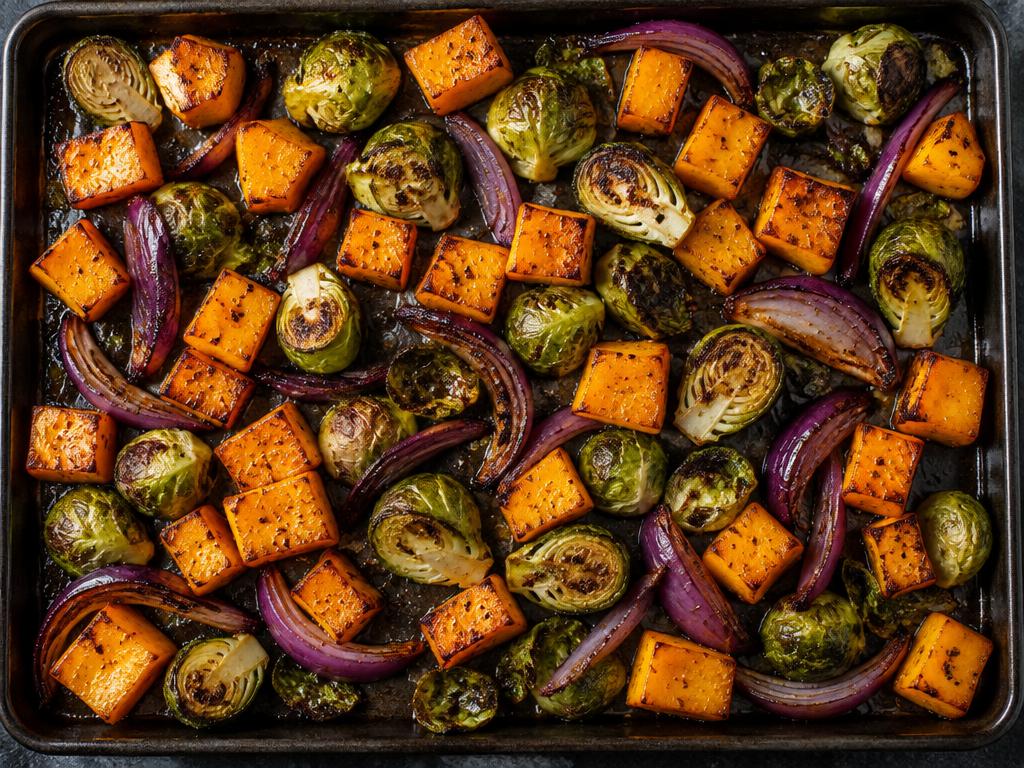
Roasting is the easiest way to make vegetables irresistible. High heat and a little space are all you need.
Give them space
Crowded vegetables steam. Use two pans if needed.
Cut evenly
Uniform pieces cook at the same rate; cut dense squash slightly smaller.
Finish with acid
A drizzle of balsamic or lemon after roasting balances the sweetness.
Choose produce with compatible roasting behavior
Butternut squash, Brussels sprouts, and onion offer contrasting textures, but they do not start with identical cooking needs. Squash is dense and needs enough time for heat to reach its center. Sprouts have tight leaves that brown rapidly on the outside, while onion layers soften and shed moisture. Selecting pieces of similar maturity and firmness makes the final tray more predictable.
Look for a squash with a firm rind and no soft, leaking areas. Sprouts should feel compact rather than spongy, with minimal yellowing. An onion should be firm and free of wet patches. These checks do not guarantee perfect flavor, but they help avoid ingredients that collapse or release excessive liquid before the rest of the tray is tender.
The recipe’s cup measurements describe prepared vegetables, not whole produce. Four cups of squash cubes often weigh roughly 560 to 650 grams depending on the cut and how loosely they fill the cup. Three cups of halved sprouts may weigh around 250 to 300 grams. Treat those weights as shopping and portioning guides, not a reason to compress extra food onto the tray. If your produce yields more than the pan can hold, reserve the surplus or roast an additional batch.
Break down squash and sprouts with less waste
Set the squash on a stable cutting board with a damp towel underneath the board to prevent slipping. Trim the ends, separate the narrow neck from the round base, and peel manageable sections with a sturdy vegetable peeler. Halve the seed cavity and scoop out the seeds with a spoon. If the squash is too hard to cut safely, buying prepared cubes is a sensible shortcut rather than forcing a knife through an unstable piece.
Cut the flesh into cubes about ¾ inch (2 centimeters) across. Avoid leaving a few unusually large chunks among much smaller ones; the large centers can remain firm while the small corners dry out. Prepared store-bought squash may also need a quick sorting pass. Cut oversized cubes down and blot away moisture that has collected in the package before adding oil.
For sprouts, remove only damaged outer leaves and trim a thin slice from the stem. Leaving some stem intact helps the halves hold together during turning. Halve medium sprouts through the stem and quarter particularly large ones. Cut onion wedges with a small portion of the root end holding each wedge together. Loose onion slivers brown much faster, so either make the pieces substantial or plan to add thin slices later in the roasting process.
Match the tray and rack to your oven
A sturdy rimmed metal sheet pan transfers heat to the bottoms of the vegetables more effectively than a deep glass baking dish. Thin, warped pans can collect oil in one corner and leave other areas dry. Before loading, check that the tray sits reasonably flat. Distribute the seasoned vegetables over two pans as the recipe indicates, rather than choosing a deep vessel simply because its volume looks sufficient.
For two pans, use upper-middle and lower-middle racks with enough clearance for air circulation. Swap their positions and rotate them when turning the vegetables, since household ovens often brown one level more aggressively. Keep the pieces in a single layer with cut faces against the metal where practical. Sprout halves in particular develop a flavorful brown surface when their flat sides maintain contact with the tray.
If using convection, follow the oven manufacturer’s conversion advice; many recipes need a setting about 25°F lower, approximately 15°C lower, and may finish sooner. Do not change the temperature and assume the original time remains exact. Start checking early and judge the centers as well as the edges. Parchment rated for the cooking temperature can help with cleanup, but it may slightly reduce direct browning compared with bare metal. Avoid loose paper near exposed heating elements.
Distribute oil and seasoning where they matter
The oil should form a thin coating over the vegetables rather than pool on the pan. Toss everything in a large bowl, scraping the sides so the last spoonful of seasoned oil does not get left behind. If the bowl is too small to turn the pieces freely, season in two batches. This gives more even coverage than drizzling over a crowded tray and hoping the lower pieces receive some oil.
Salt by the recipe initially, then taste a cooked piece before adding more. Different salt crystal sizes pack differently into a teaspoon, so a measured amount can vary by brand and grind. When adjusting, sprinkle lightly across the whole batch rather than salting one corner. Dried thyme or rosemary can be added with the oil, but crush large rosemary needles or chop them finely so the seasoning is pleasant to eat.
Keep maple syrup for the finish as directed. Added at the beginning, its sugars can darken faster than the squash becomes tender, especially around thin onion edges. The same caution applies to sweet bottled balsamic glazes, which are more concentrated than plain balsamic vinegar. Drizzle those sparingly after roasting. If adding chopped garlic, introduce it late with a little oil or use whole peeled cloves; tiny exposed pieces can scorch during the full high-temperature roast.
Know the difference between browned and tender
Color is only half the doneness test. Pierce a large squash cube with the tip of a small knife; it should enter with little resistance, not stop against a hard center. Check a sprout through its thick stem end as well. The outside leaves can look beautifully browned while the middle remains tougher than you want, especially if the halves were unusually large.
Turn the pieces when their lower surfaces have taken on color and release reasonably easily from the metal. Scraping repeatedly during the first few minutes can tear softened surfaces before a crust develops. Use a thin spatula and work underneath a cluster rather than stabbing at individual pieces. If the onion is finished before the squash, move it to a clean bowl while the denser vegetables continue.
When the tray looks dry and dark but the centers remain hard, lower the oven to 375°F (190°C) and continue checking. A very small splash of water plus a brief loose foil cover can help dense pieces soften, though it will soften crisp edges too. Remove the cover afterward if more browning is needed. If everything is pale and wet, address crowding and surface moisture instead; more maple syrup or extra oil will not solve a steam-filled pan.
Build satisfying meals around the roasted batch
To make these vegetables the center of dinner, pair them with a protein and a starch rather than simply increasing the drizzle. Warm lentils, chickpeas, or white beans complement the sweet squash. Drain canned beans well and heat them separately before combining, or add them to a separate tray so they do not increase moisture around the vegetables during the crucial browning stage.
A bowl of cooked farro or quinoa gives the roasted mix somewhere to land. Start the grain early enough to finish alongside the tray, following the package instructions because varieties differ. Add a spoonful of plain yogurt mixed with lemon and a little water for a cool sauce. Keep the sauce separate until serving so diners can choose how much richness they want without softening every browned edge.
For a more substantial side platter, finish with toasted pumpkin seeds and chopped parsley. Toast seeds separately and watch closely; small seeds can burn while attention is on the oven. Feta adds a salty contrast, but use it after tasting the vegetables and reduce extra salt accordingly. If serving anyone with allergies or dietary restrictions, keep nuts, dairy, and other optional toppings in separate bowls and use clean spoons rather than assuming a vegetable-based dish is automatically suitable for everyone.
Prep ahead while protecting the finished texture
Cutting vegetables ahead saves the most hands-on time. Keep prepared squash, sprouts, and onion refrigerated at 40°F (4°C) or below in clean covered containers. Store them separately if practical, since onion moisture and aroma can spread through the batch. Before roasting, blot away condensation and add oil and salt close to cooking rather than leaving the vegetables sitting in a salty puddle for hours.
If roasting ahead, cool the vegetables promptly in shallow containers and refrigerate within two hours, or one hour if the surrounding temperature is above 90°F (32°C). Use cooked leftovers within three to four days. Do not leave the tray in a switched-off oven overnight; enclosed warmth is not safe storage. Freeze extra portions sooner if needed, understanding that thawed squash and sprouts will be softer and better suited to soups or mashed grain bowls.
Reheat a spread-out portion in a 400°F (205°C) oven, checking until the leftovers reach 165°F (74°C). The time depends on the quantity and how cold they start. Save fresh herbs, seeds, and extra vinegar for afterward. A microwave is useful when speed matters, but it steams rather than restores browned edges. For a different second meal, blend reheated squash and onion with hot broth into soup and serve the sprouts as a separate topping.
Sheet Pan Roasted Autumn Vegetables
Ingredients
- 4 cups butternut squash cubes
- 3 cups Brussels sprouts, halved
- 1 red onion, wedges
- 3 tbsp olive oil
- 1 tsp salt
- 1 tbsp maple syrup
- 1 tbsp balsamic vinegar
Instructions
- Heat oven to 425°F (220°C).
- Toss vegetables with oil and salt; spread on two pans.
- Roast 25–30 minutes, flipping halfway.
- Drizzle with maple and balsamic and serve.
Nutrition (per serving, estimated)
Calories 190 · Protein 4g · Carbs 24g · Fat 10g
Nutrition estimated using USDA FoodData Central values; actual values vary by brand and portion.
Key Takeaways
- Give them space: Crowded vegetables steam.
- Cut evenly: Uniform pieces cook at the same rate; cut dense squash slightly smaller..
- Finish with acid: A drizzle of balsamic or lemon after roasting balances the sweetness..
FAQ
Can I prep ahead?
Cut vegetables up to 2 days ahead and refrigerate.
Sources
Made this recipe? Rate it and share it on Pinterest!
Tag us so we can see your creations.