Kitchen Gear Reviews
Best Chef's Knives for Home Cooks: German vs. Japanese
By Sarah Mitchell · September 19, 2026 · 7 min read
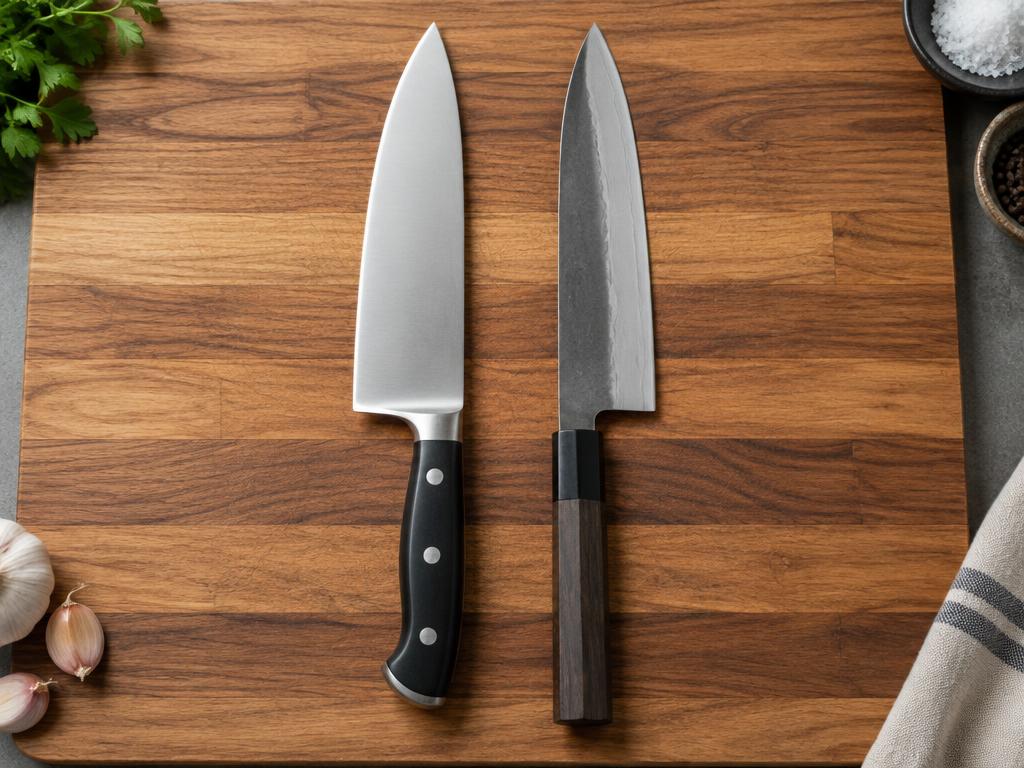
If you buy one great tool, make it a chef's knife. Here's how to choose the right style for how you cook.
German-style knives
Heavier, softer steel, curved blade for rocking. Very durable and forgiving.
Japanese-style knives
Lighter, harder steel with a sharper angle. Precise but more prone to chipping.
Size
An 8-inch blade suits most cooks.
Care
Hand wash, dry immediately, hone regularly, and use wood or plastic boards.
Start with your cutting motion rather than a country label
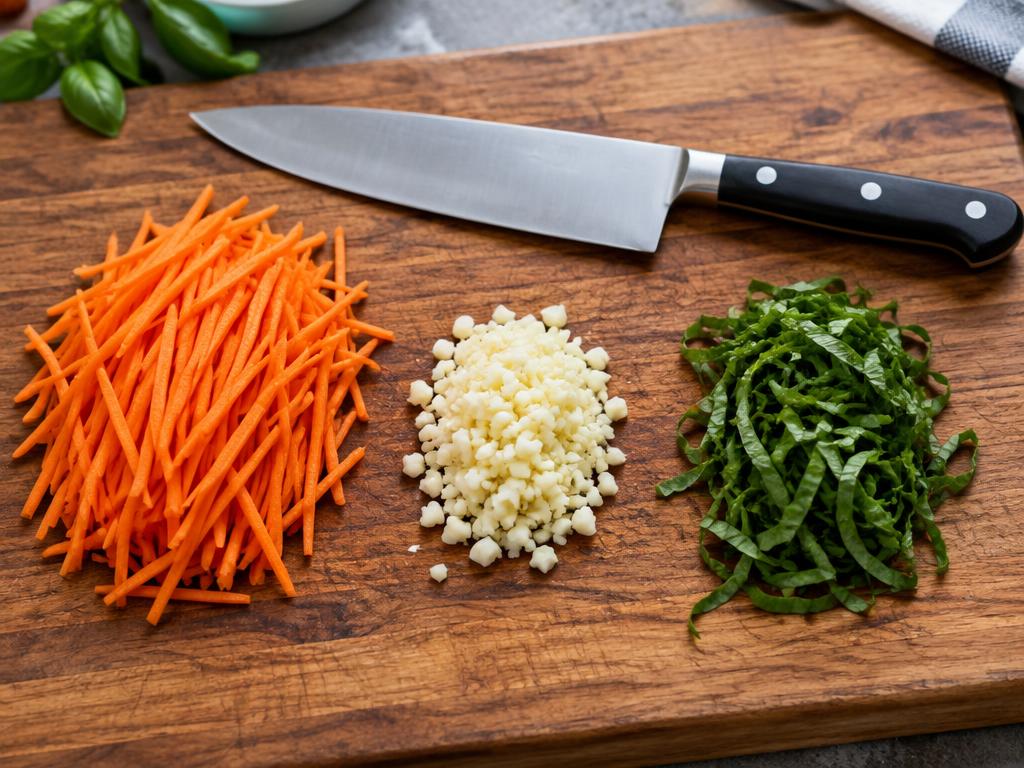
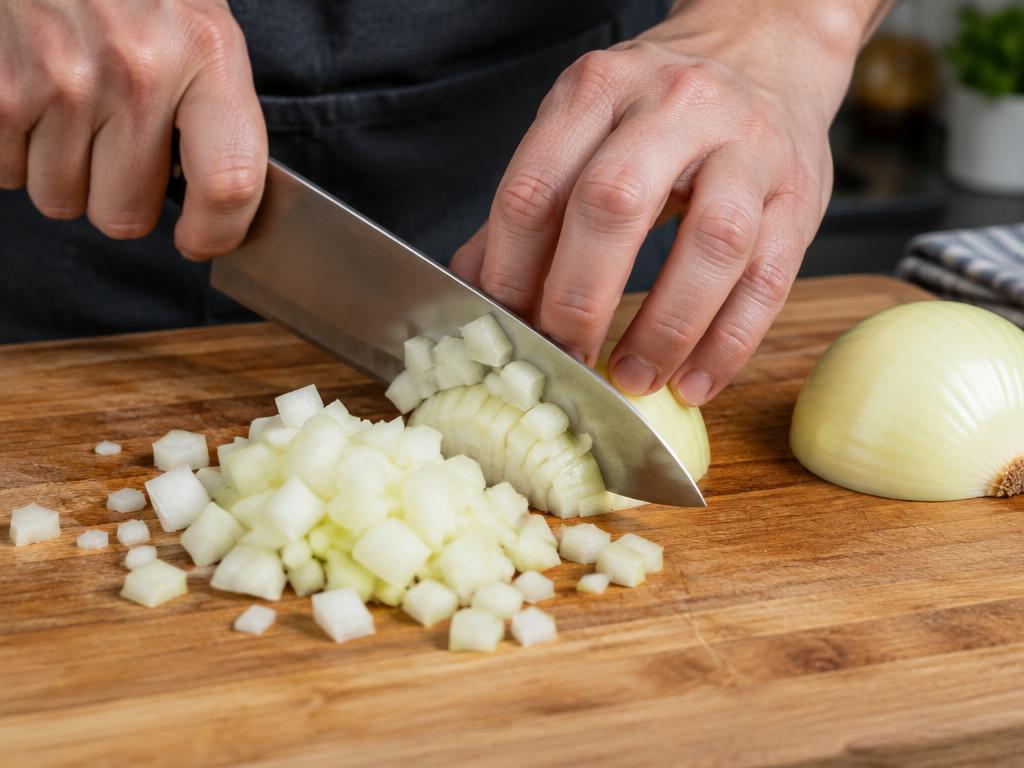
Knife styles overlap more than broad national categories suggest. Look at the actual blade profile: a pronounced belly encourages rocking, while a flatter section keeps more edge against the board during push cuts. Neither motion is inherently superior for every cook. Think about how you chop herbs, slice onions, and portion vegetables, then choose a profile that supports the movement you already perform comfortably and safely.
The tip also affects everyday work. A fine tip can help with precise cuts, but it requires care around hard ingredients and crowded sinks. A taller blade can provide knuckle clearance and make it easier to guide sliced food, although extra height may feel cumbersome during small tasks. Compare the entire profile, not just the length printed on the package, because equally long knives can feel very different at the board.
Treat national style as a loose description rather than a guarantee of sharpness, toughness, or suitability. Steel treatment, blade thickness, edge geometry, and manufacturing choices all matter. A sturdy-looking blade is not automatically appropriate for bones or frozen food. If you want one general-purpose chef's knife, prioritize a predictable cutting motion and manageable geometry over a style label that suggests capabilities the specific knife may not actually have.
Assess fit using a realistic grip
If you can handle a knife before purchasing, use the grip you intend to cook with rather than simply wrapping your hand around the handle for a second. Many cooks place the thumb and forefinger near the blade's heel in a pinch grip, with the remaining fingers around the handle. Others use a full handle grip. Either way, check for pressure points and whether your hand feels securely supported without squeezing hard.
Look closely at the transition between blade and handle. Sharp corners along the spine or heel can become uncomfortable during extended prep, even when the handle itself feels smooth. A bulky bolster may push your grip farther back than you prefer. Smaller hands do not always need a smaller blade, and larger hands do not automatically need a heavier knife; clearance and handle shape can matter more than overall dimensions.
When shopping online, seek clear side and top views, handle measurements, and useful return conditions. Photographs rarely reveal whether a handle feels slippery in your hand, so avoid treating decorative materials as evidence of good grip. Follow store rules when evaluating a purchase, and do not perform unsafe improvised sharpness demonstrations. A comfortable tool should feel controlled during ordinary cutting, not impressive only when held still for a product photograph.
Read steel descriptions without chasing a single number
Stainless steel resists corrosion but still benefits from prompt cleaning and drying. Carbon steel can discolor or develop a patina during normal use and needs more attention around moisture and acidic ingredients. Neither category by itself determines how well a knife cuts. If you know you tend to leave prep tools on a damp board, a lower-maintenance blade is likely a better match than a more demanding material chosen for its reputation.
Hardness figures tell only part of the story. They do not describe the full heat treatment, blade geometry, or resistance to damage in your kitchen. Higher hardness can support a long-lasting fine edge, but it does not make a blade immune to chipping or guarantee effortless sharpening. Ask how the knife is intended to be maintained and whether local sharpening services are comfortable working with that style and steel.
Layered patterns, special coatings, and elaborate steel names can be visually appealing without improving your particular cooking tasks. Consider them optional unless the maker explains a practical benefit that matters to you. A straightforward knife with clear care guidance and accessible maintenance can be a better purchase than an ornate blade you are reluctant to use. Budget for keeping the edge functional, not just for acquiring the blade in the first place.
Separate thin slicing performance from heavy-duty work
Two sharp knives can behave differently in a dense carrot because the blade behind the edge must also pass through the food. A thin blade may encounter less resistance, while a thick blade can wedge the ingredient apart. That difference is not captured by a simple description of the edge angle. Look for information about intended use and overall geometry instead of assuming a sharper advertised angle guarantees easier cutting through every ingredient.
Thin edges require appropriate technique. Twisting a blade while it is embedded in a hard squash or scraping it sideways across the board can put stress on the edge. Use a tool suited to especially tough ingredients, and reposition the food rather than levering against a stuck knife. For moving chopped ingredients, a bench scraper is often more convenient and avoids dragging the cutting edge sideways against the board repeatedly.
A chef's knife is not a substitute for a cleaver designed for bones, a tool for opening packaging, or a blade for frozen blocks. Keep those tasks separate even if your knife feels substantial. Buying extra toughness for rare abusive tasks may sacrifice the pleasant cutting feel you want every day. Choose the chef's knife for ordinary prep, then use appropriate dedicated tools or ask a butcher to handle work beyond its intended role.
Plan edge maintenance before the knife becomes frustrating
Honing and sharpening are related but not interchangeable. Honing can help maintain some edges between sharpening sessions, while sharpening removes metal to create a renewed edge. The appropriate tool and technique depend on the blade. Do not assume a coarse rod or aggressive pull-through device is suitable for every knife, especially a thin or hard edge; follow the maker's guidance and seek qualified help when unsure.
Decide whether you want to learn a sharpening method or pay for a service. A guided system can reduce some variables, while stones require practice and attention to consistent angles. Professional work is useful if you lack time or confidence, but ask whether the service handles your blade type and any unusual geometry. Single-bevel knives need specialized understanding and should not be treated like an ordinary double-bevel chef's knife.
Notice performance changes during actual prep. If an edge slips on tomato skin or requires noticeably more force for familiar cuts, address it rather than compensating with pressure. More force reduces control and makes fatigue worse. There is no universal sharpening calendar because board choice, frequency of use, food, and technique vary. A maintenance plan should respond to how the knife cuts, while avoiding unnecessary aggressive sharpening that removes metal prematurely.
Build a storage and workstation system that protects the edge
A knife needs a secure place between tasks and between meals. A fitted guard, suitable drawer insert, block, or properly installed magnetic holder can work, but each has conditions. Guards should be used on clean, dry blades, and drawer storage should prevent contact with other utensils. With a magnetic holder, follow installation instructions and place knives carefully so the edge does not strike or drag across the surface.
On the counter, stabilize the cutting board before beginning. A board that slides makes even a well-balanced knife feel unreliable. Leave enough clear space for ingredients, scraps, and finished pieces so the blade does not disappear under clutter. Avoid putting a knife into a sink full of water, where someone may reach in without seeing it. Wash and dry it separately rather than letting it mingle with dishes.
The board is part of your knife purchase even if you already own one. Glass, stone, and other very hard cutting surfaces can punish an edge and create an unpleasant cutting experience. Choose an appropriate board that you can clean and store conveniently, then maintain it according to its material. A comfortable knife on a stable, suitable board usually offers more daily benefit than upgrading steel while ignoring a poor workstation.
Buy for your prep habits and total ownership budget
Look at the ingredients you prepare most often. Someone chopping a large volume of vegetables may value low weight and easy push cutting, while another cook prefers a curved profile for herbs and mixed prep. If you frequently work in a small kitchen, think about whether the blade can move comfortably on the board you actually use. An impressive knife becomes inconvenient if every stroke feels constrained by the workspace.
Set aside part of the budget for a suitable board, safe storage, and eventual sharpening. Check warranty terms for manufacturing defects, but do not expect normal dulling or misuse damage to be covered. Verify the seller and the exact product description, especially when listings use broad style labels. If a specification is important to you, check the current listing or ask the maker rather than assuming all versions share identical steel or dimensions.
Finally, avoid treating a new knife as a shortcut around technique. A modest, well-maintained blade used with stable food and deliberate cuts can be more helpful than an expensive blade used carelessly. Practice a controlled pace, keep fingertips clear of the cutting path, and stop when a task feels awkward. The best purchase is a knife you can comfortably maintain and use often, not one whose reputation makes you afraid to take it out.
Comparison
| German | Japanese | |
|---|---|---|
| Weight | Heavier | Lighter |
| Edge angle | ~20° | ~15° |
| Hardness | Softer, tougher | Harder, sharper |
| Best for | Heavy-duty chopping | Precise slicing |
Pros
- Covers 90% of cutting tasks
- Lasts decades with care
Cons
- Quality knives are an investment
- Requires regular honing
Key Takeaways
- German-style knives: Heavier, softer steel, curved blade for rocking.
- Japanese-style knives: Lighter, harder steel with a sharper angle.
- Size: An 8-inch blade suits most cooks..
FAQ
Do I need a full knife set?
No — a chef's knife, paring knife and serrated bread knife cover nearly everything.
Sources
Found this helpful? Share it with a friend who loves to cook.
Tag us so we can see your creations.