Cooking Guides & Masterclasses
How to Dice an Onion (Fast, Even and Tear-Free)
By Sarah Mitchell · October 10, 2026 · 7 min read
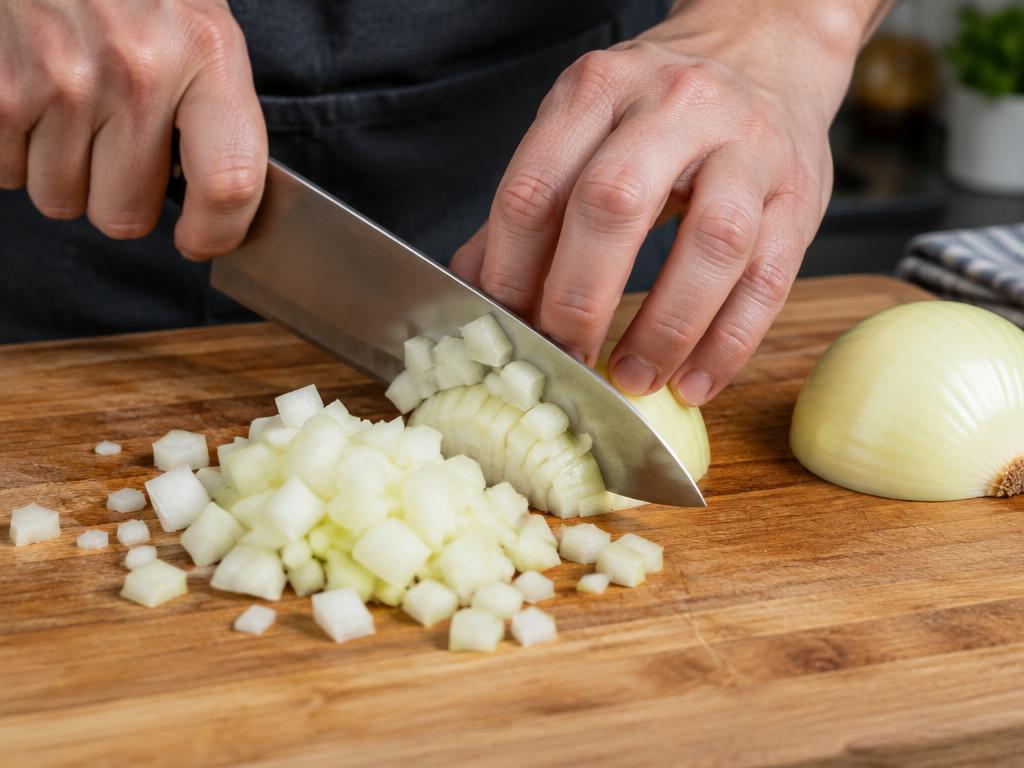
Nearly every savory recipe starts with an onion. Master this one technique and you'll cook faster, more safely, and with more even results.
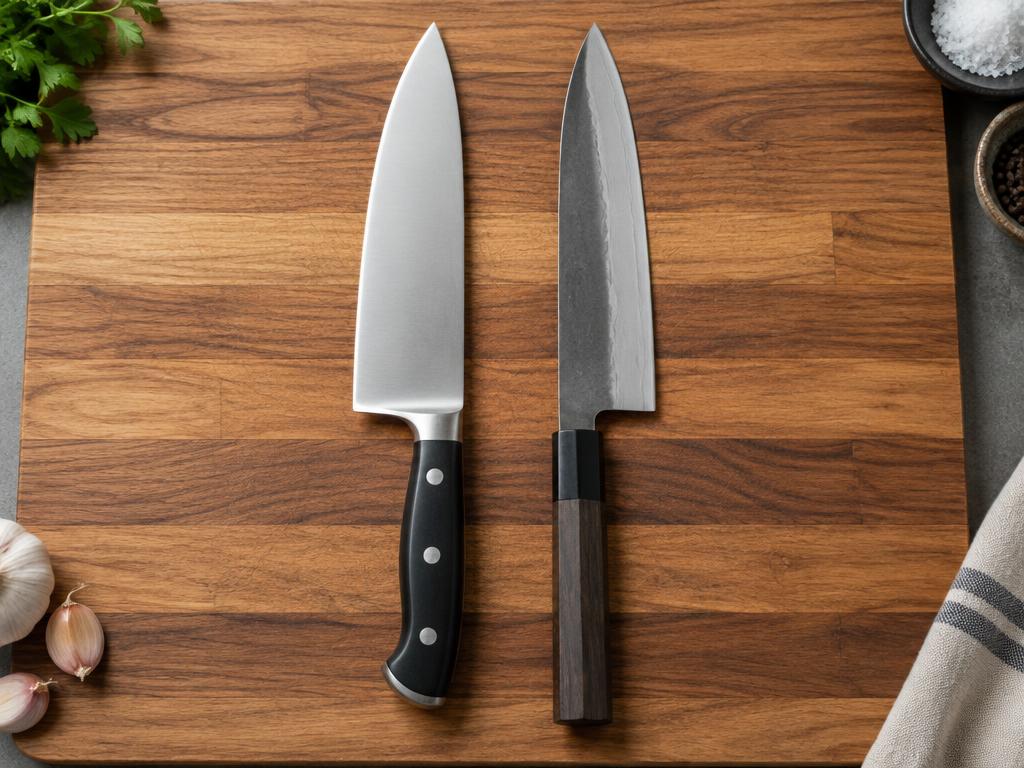
Use a sharp chef's knife
A dull knife crushes cells and releases more of the compound that makes you cry. It also slips more easily.
Step 1: Halve through the root
Cut off the stem end, leave the root intact, then halve top to bottom and peel. The root holds the layers together.
Step 2: Vertical cuts
Lay a half flat and make thin parallel cuts toward the root without cutting through it.
Step 3: Cross cuts
Slice across your vertical cuts to release an even dice. Curl your fingertips in the 'claw' grip.
How to avoid tears
Chill the onion for 15 minutes, work near a running fan, and keep your knife sharp.
Choose the onion for the finished dish
Start by matching the onion to its job rather than assuming every variety behaves identically. Yellow onions are useful all-purpose choices for soups, beans, and cooked sauces. White onions have a crisp bite that suits fresh toppings, while red onions add color to salads and salsas. Sweet onions generally contain more water, so a crowded pan of them can take longer to lose moisture. The cutting method stays similar, but the cooking behavior changes. For a first practice session, choose a firm, medium onion weighing roughly 6–8 ounces (170–225 grams), which is easier to control than a very large specimen.
Look for dry outer skins, a firm neck, and no leaking or soft patches. Discard an onion with extensive decay rather than trying to disguise damaged flesh in a fine dice. Remove loose skin, rinse the onion under running water before cutting, and dry it so it does not slide. Do not use soap on produce. Set aside a bowl for the finished pieces and another for scraps before beginning. Having both within easy reach prevents the common interruption of carrying a knife across the kitchen while looking for somewhere to put peelings. Clear the board after peeling so brittle skins cannot interfere with the blade.
Build a stable cutting station before the first slice
A board that shifts even slightly makes controlled cuts harder. Put a nonslip mat or a thin, damp kitchen towel underneath a flat cutting board, then press on opposite corners to check for movement. Avoid a thick, folded towel that makes the surface rock. Position the board several inches back from the counter edge, with enough clear space that the knife handle will not hit a bowl. Good light matters: you should be able to distinguish the pale onion layers from the board without leaning your face over the blade.
Choose a knife you can guide comfortably through the onion without excessive force. An 8-inch chef's knife works well for most medium onions, but a shorter vegetable knife may suit smaller hands. Length alone does not determine control; a secure handle, intact edge, and manageable weight matter more. If the blade wedges in the onion, stop and reposition instead of pushing harder. Keep the handle dry throughout the task. Place a bench scraper nearby for moving the finished dice; sweeping food with the cutting edge scrapes it against the board and encourages careless hand movements. Before each new series of cuts, move loose pieces out of the blade's path.
Use the onion layers as a map for your cuts
Once the onion half is sitting on its broad, flat face, examine the curved layers at the cut stem end. Those natural divisions already separate much of the flesh. Your lengthwise cuts divide the layers into strips, and the final crosswise cuts shorten those strips into pieces. This explains why a basic dice does not require a series of risky horizontal slices toward your holding hand. The result will not be a box of mathematically perfect cubes, because the layers curve and vary in thickness, but it will be consistent enough for most home cooking.
For more uniform pieces, angle the outer lengthwise cuts slightly toward the center of the onion, following its rounded shape. Keep the center cuts closer to vertical. Begin with the knife tip positioned just short of the root end and use a controlled slicing motion through the flesh. Leave enough uncut material near the root to hold the sections together; roughly 1/2 inch (1 centimeter) is a useful starting point. Do not try to maximize yield by cutting right against your fingers. When approaching the outer edges, pause and check that the onion is still resting flat. If a section starts rolling, place that piece on its widest cut side and finish it separately.
Control piece size without chasing perfect cubes
Decide on a target size before making the first lengthwise cut. For a delicate sauce or meatball mixture, aim for pieces about 1/8 inch (3 millimeters) across. For a chunky soup or bean dish, pieces around 3/8 inch (1 centimeter) may be more useful. Keep the spacing of the crosswise cuts similar to the spacing of the first cuts. If the first cuts are wide but the second cuts are very narrow, you will get short strips rather than an even dice. A few irregular pieces are normal and do not justify repeatedly chopping the whole pile.
Size affects both texture and timing. Tiny pieces soften quickly, release moisture readily, and can disappear into a long-cooked sauce. Larger pieces remain noticeable and need more time to lose their raw crunch. When a recipe gives only a cooking time, use the onion's appearance and tenderness as additional guides: translucent edges and a softened center mean more than a timer alone. If some pieces are noticeably larger, pull them aside and recut those instead of reducing every piece to the smallest size. That selective correction preserves texture and prevents the wet, crushed mixture that results from indiscriminate chopping.
Recover when the layers fan out or the knife stalls
An onion that spreads apart halfway through cutting usually needs less force, a wider uncut root bridge, or a more stable holding position. Stop while the knife is resting on the board, gather the loose sections, and turn their flat faces downward. Cut small bundles separately rather than squeezing the whole onion into a ball. As you approach the root during the crosswise stage, turn the remaining piece onto a stable face and slice around the tough core. The last usable scraps do not need to match the prettiest pieces if they are going into stock or a blended sauce.
If the knife skids across a slick outer layer, remove that loose layer and dry the surface before continuing. If you find yourself sawing hard or gripping until your knuckles ache, the edge may need attention. Honing cannot repair a genuinely dull or damaged edge; sharpen it appropriately or use another sound knife. A tearful pause is also a good reason to stop rather than hurry. Put the knife down, step away, and let your eyes recover. Avoid rubbing your eyes with onion-covered fingers. Onion irritation comes from compounds released when cells are damaged, so careful slicing and ventilation can help, but no technique guarantees that every onion will be tear-free.
Adjust raw onion flavor without losing its texture
For a salsa or salad, taste one small piece before mixing in the entire batch. Raw onion strength varies considerably. If it overwhelms the other ingredients, place the dice in a fine-mesh strainer and rinse briefly under cold running water. Drain thoroughly, then spread it on a clean towel or paper towels and blot dry. Removing surface moisture matters: wet onion can dilute a dressing or make a fresh topping watery. Rinsing can soften the immediate bite, but it will not make a strongly flavored onion identical to a sweet variety.
For a brighter topping, toss about 1/2 cup (75 grams) of diced onion with a tablespoon of lime juice or vinegar and a small pinch of salt. Let it stand for 10–15 minutes while preparing the rest of the meal, then taste and adjust. This is a quick flavor treatment, not a shelf-stable preservation method; refrigerate the mixture when it is not being served. Add tender herbs near serving time so they stay fresh-looking. If the recipe needs onion to brown in oil, skip the acid soak and dry the dice well instead. Acid, salt, and added water all change what happens in the pan, so treat raw toppings and sautéing prep as different tasks.
Practice with a useful batch and store it correctly
Use one onion for a deliberate practice drill rather than racing through several. Cut one half for a cooked sauce and the other for a chunkier soup. Spread a spoonful of each dice on the board and compare the largest and smallest pieces. Look for one improvement to make next time: more consistent spacing, less pressure, or fewer loose layers. Cook the pieces and notice how quickly each size softens. This turns an abstract knife exercise into a practical connection between cut size and the food on your plate, without wasting ingredients or rewarding speed over control.
Transfer cut onion promptly to a clean, covered container in a refrigerator at 40°F (4°C) or below. Label the container with the preparation date and plan to use it soon; do not rely on smell alone to judge safety. Keep it separate from raw meat and its juices. For longer storage, freeze the dice in a thin layer, then transfer it to a freezer container, pressing out excess air. Frozen onion loses its crisp raw texture, so reserve it for cooked dishes and add it directly from frozen when practical. Finally, wash the knife and board with hot, soapy water, rinse, and dry thoroughly. Clean the countertop too, including any damp area beneath the board.
Key Takeaways
- Use a sharp chef's knife: A dull knife crushes cells and releases more of the compound that makes you cry.
- Step 1: Halve through the root: Cut off the stem end, leave the root intact, then halve top to bottom and peel.
- Step 2: Vertical cuts: Lay a half flat and make thin parallel cuts toward the root without cutting through it..
FAQ
What size is a 'small dice'?
About 1/4 inch (6mm). Medium is 1/2 inch, large is 3/4 inch.
Sources
Found this helpful? Share it with a friend who loves to cook.
Tag us so we can see your creations.