Quick & Easy Meals
15-Minute Garlic Butter Pasta (Pantry Dinner)
By Sarah Mitchell · October 5, 2026 · 7 min read
Jump to Recipe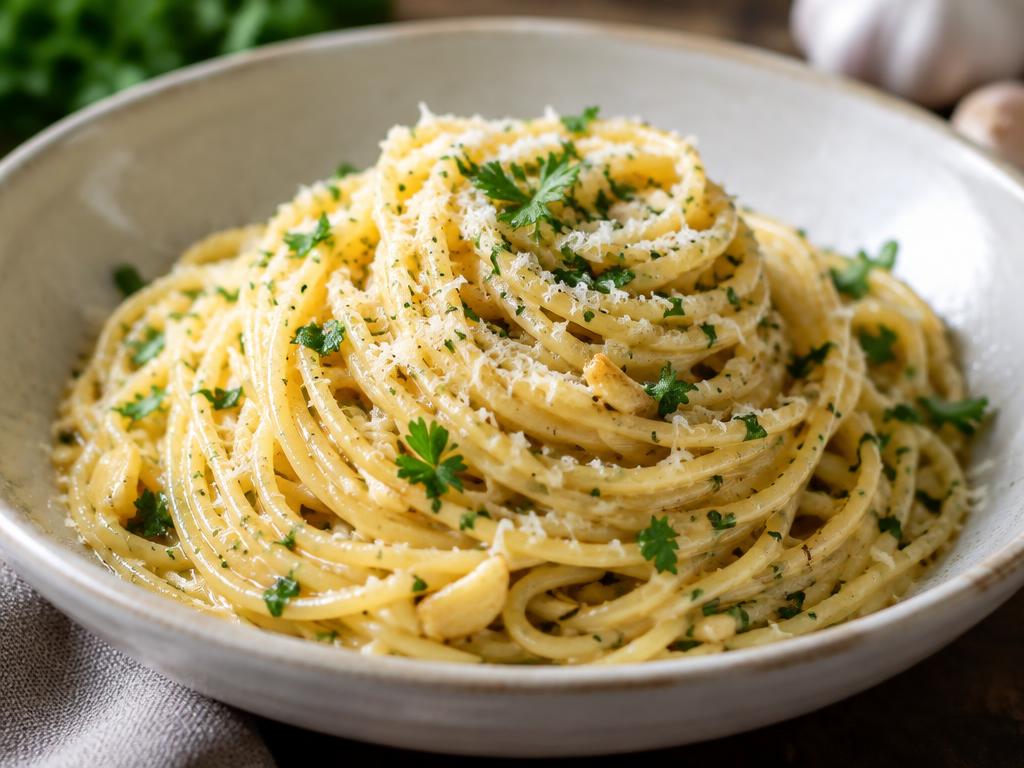
When there's 'nothing to eat', there's almost always pasta, garlic and butter. This recipe turns them into something special.
Salt the water well
Aim for about 1 tbsp kosher salt per 4 quarts — pasta seasons from the inside.
Save the pasta water
Starchy water emulsifies butter and cheese into a creamy sauce.
Gently cook the garlic
Low heat turns garlic sweet and golden; high heat makes it bitter.
Make it a full meal
Add frozen peas, shrimp, spinach or a fried egg.
Set up a two-pan cooking station
A fast pasta dinner depends on the order of operations more than hurried knife work. Put the water on first, then set a wide skillet beside the pot. The skillet must hold both the cooked spaghetti and enough liquid to toss it without spilling. For 8 ounces (225 grams) of dry pasta, a 10- to 12-inch skillet generally gives useful working space.
Measure the butter, grate the cheese, slice the garlic, and chop the parsley while the water heats. Place a heatproof measuring cup near the stove as a visible reminder to collect cooking water. A pair of tongs helps transfer long noodles and toss them through the sauce. Keep a ladle nearby as well; it makes small, controlled additions easier than pouring from a heavy pot.
Do not start browning the garlic simply because the skillet is ready. Match the sauce to the pasta schedule. If the garlic reaches pale gold before the spaghetti is nearly cooked, move the skillet off the burner. Residual heat continues cooking thin slices, especially in a heavy pan. You can return it to gentle heat when the noodles are ready instead of trying to hold garlic at exactly the right color for several minutes.
Choose noodles and cheese that cooperate
Spaghetti works well because its long strands move easily through a light butter sauce, but linguine or thin fettuccine can also fit this method. Short shapes such as fusilli trap liquid differently and may need a little more tossing. Keep the dry weight the same when substituting, then follow the package cooking range as a starting point rather than borrowing spaghetti timing for every shape.
Freshly grated Parmesan generally disperses more readily than coarse shreds. Use the fine holes of a grater and measure without packing it tightly. Packaged grated cheese may contain anti-caking ingredients and can behave differently in a delicate sauce. It can still be useful, but add it gradually and expect a less uniform finish. A large handful dumped into one spot is harder to incorporate than a light, even shower.
Whole-wheat pasta brings a firmer bite and a more noticeable grain flavor. Taste it early, since the difference between pleasantly chewy and unpleasantly firm is not always obvious from appearance. Gluten-free pasta needs particular attention because some varieties soften or break with aggressive tossing. For those, use gentle folding and reserve cooking water before draining; you may need less liquid if the water is especially thick with released starch.
Use texture checks instead of a stopwatch alone
Start tasting a strand about two minutes before the lower end of the package range. Let it cool enough to bite safely, then assess the center. It should resist the teeth slightly without tasting chalky or raw. Because the pasta finishes in the skillet, transfer it while it still has a little more firmness than you want on the plate.
A strong rolling boil is useful when the noodles first enter because the cold pasta lowers the water temperature. Stir immediately and again during the first few minutes to separate strands before their surfaces become sticky. Once the pot has recovered, maintain an active boil without letting foam climb over the rim. A larger flame does not make boiling water meaningfully hotter; it mostly increases evaporation and spill risk.
If the noodles are nearly done but the sauce is delayed, avoid draining them and leaving them in a dry colander. They will stick together and continue softening. Instead, finish the garlic promptly and move the pasta directly into the skillet. When a delay is unavoidable, take the pot off the burner and recognize that even hot standing water continues cooking the noodles. The best correction is usually improving coordination next time, not rinsing away the starch.
Understand the glossy butter-and-water finish
Butter supplies fat, but a coating of melted fat alone can feel greasy. Cooking water supplies moisture and starch; tossing breaks the fat into small droplets distributed through that liquid. The starch helps the mixture remain cohesive long enough to coat the noodles. This is why the pan can look loose at first and then become glossy after several energetic turns with tongs.
Begin with the recipe’s measured water, but treat the remaining reserved cup as an adjustment tool rather than an ingredient that must all be used. A broad skillet evaporates liquid faster than a narrow one. Pasta also keeps absorbing moisture as it sits. Add water a tablespoon or two at a time if strands drag across the pan or the sauce looks oily instead of flowing around them.
Take the skillet off direct heat before adding Parmesan. A violently bubbling pan can make the cheese tighten into little clumps instead of dispersing. Scatter in a portion, toss, and repeat. The finished sauce should look a little looser in the pan than you want on the plate, because it thickens during serving. Warm bowls help avoid a sudden drop in temperature that makes the butter sauce stiffen before the first bite.
Rescue clumps, excess salt, and burnt garlic
If cheese gathers into sticky threads, stop adding more and take the pan off the heat. Add a small splash of warm cooking water and toss gently to loosen what you can. Severe clumping may not disappear completely, but lowering the temperature prevents it from worsening. Next time, grate the cheese finer and incorporate it gradually after the bubbling has subsided.
If the sauce tastes too salty, remember that both the cheese and pasta water contribute seasoning. Use plain hot water for further adjustments rather than more salted cooking water. A little extra unsalted butter can soften the impression, but it does not remove salt. For a badly oversalted batch, the most reliable correction is adding separately cooked unsalted pasta or vegetables, which increases the amount of food sharing that salt.
Burnt garlic needs a different response. Blackened slices and acrid-smelling fat can flavor the entire meal, so starting the garlic mixture again is often faster than trying to disguise it. Transfer the pasta temporarily to a warm bowl if necessary, wipe the cooled skillet safely, and make a fresh small batch. Lemon, parsley, and cheese cannot remove the bitter compounds. Prevent the problem by slicing garlic evenly and keeping the heat low enough to watch its color change.
Add substance without overwhelming the sauce
For peas, add about 1 cup frozen peas to the pasta pot near the end of cooking and let the water return to a boil. They should be hot and tender before draining. This puts a vegetable into the meal without requiring another pan. Baby spinach works differently: fold it into the hot skillet in small handfuls, allowing each addition to wilt before deciding whether more is needed.
For shrimp, cook them separately before building the garlic sauce, then return them only at the end. Seafood should reach 145°F (63°C); the flesh should also be pearly and opaque. Keeping cooked shrimp out of the pan during prolonged tossing helps prevent a rubbery texture. Use a clean plate for the cooked shrimp rather than the dish that held them raw, and wash utensils that touched the raw seafood.
Cannellini beans offer a pantry alternative. Drain and rinse a 15-ounce (425-gram) can, then warm the beans gently before folding them into the finished noodles. Their soft texture means vigorous tossing can break them apart. A side of sliced tomatoes or crisp lettuce supplies freshness without demanding another rich sauce. Taste the completed pasta before adding lemon juice: a few drops can brighten it, but too much can hide the butter and garlic.
Handle leftovers without losing all the silkiness
This pasta is at its best immediately after tossing, so cook only what you expect to serve when possible. If you need to prepare ahead, grate the cheese, wash and dry the parsley, and measure the dry noodles earlier in the day. Refrigerate prepared perishable ingredients promptly. Keep garlic prep refrigerated and do not store homemade garlic in oil at room temperature.
For leftovers, move pasta into shallow containers and refrigerate within two hours, or one hour above an ambient 90°F (32°C). Keep the refrigerator at 40°F (4°C) or colder and use the pasta within three to four days. Cooked pasta should not sit on the counter overnight; reheating is not a way to make improperly stored food safe. Store any raw salad accompaniment separately so it does not wilt against warm noodles.
Reheat a single portion in a covered skillet with a splash of water over moderate-low heat, stirring and separating the strands as they soften. Bring leftovers to 165°F (74°C), checking more than one area. Add fresh parsley after heating, not before. The sauce may not regain its original emulsion perfectly, but gradual warming and a little moisture give a better result than heating uncovered until the edges turn dry and chewy.
15-Minute Garlic Butter Pasta (Pantry Dinner)
Ingredients
- 8 oz (225g) spaghetti
- 3 tbsp butter
- 1 tbsp olive oil
- 5 garlic cloves, thinly sliced
- 1/4 tsp chili flakes
- 1/2 cup grated parmesan
- 2 tbsp chopped parsley
Instructions
- Cook spaghetti in well-salted boiling water until 1 minute shy of al dente; reserve 1 cup water.
- Meanwhile melt butter with oil over low heat, add garlic and chili, cook 3 minutes until pale gold.
- Add pasta and 1/2 cup pasta water; toss vigorously.
- Remove from heat, add parmesan and toss until glossy, loosening with more water.
- Top with parsley and black pepper.
Nutrition (per serving, estimated)
Calories 580 · Protein 17g · Carbs 78g · Fat 22g
Nutrition estimated using USDA FoodData Central values; actual values vary by brand and portion.
Key Takeaways
- Salt the water well: Aim for about 1 tbsp kosher salt per 4 quarts — pasta seasons from the inside..
- Save the pasta water: Starchy water emulsifies butter and cheese into a creamy sauce..
- Gently cook the garlic: Low heat turns garlic sweet and golden; high heat makes it bitter..
FAQ
Should I add oil to pasta water?
No — it floats on top and prevents sauce from clinging.
Sources
Made this recipe? Rate it and share it on Pinterest!
Tag us so we can see your creations.